01Record the constraints before the shortlist
Make fields for group size, arrival window, departure deadline, conversation preference, menu questions and travel allowance. Add a source and checked date beside each venue detail. Separate required conditions from preferences: an agreed departure deadline is different from a preference for a window seat. Keep unresolved information in a question column. A venue that cannot yet be evaluated should remain pending rather than receive a low score. This makes the sheet useful for deciding what to ask next as well as for making the eventual choice.
02A fictional two-venue example
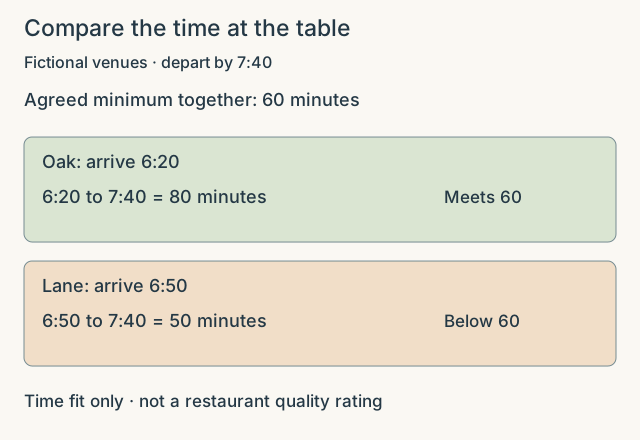
Four fictional guests are free from six until eight. They allow twenty minutes of travel each way, leaving eighty minutes at the venue. Venue Oak offers a fictional arrival at six twenty; Venue Lane offers six fifty. Under the same travel assumption, the group must leave either venue at seven forty. Oak therefore leaves eighty minutes on site, while Lane leaves fifty. If the group has agreed it wants at least an hour together, Lane does not meet that condition. This is a schedule calculation, not a judgment about either venue’s quality.
03Confirm only what the evidence supports
The group could ask Oak about availability, the relevant menu questions and the requested atmosphere before committing. A successful confirmation resolves those specific rows; it does not validate every impression on the sheet. Keep any booking reference private and publish only details appropriate for an editorial audience. After the occasion, distinguish the actual experience from the earlier plan and date any changes. The resulting record explains why a setting was chosen and what remained uncertain, without turning an invented comparison into a restaurant recommendation.